


The 4 terms, defined
Start with the umbrella. Boost means any arrangement where someone more skilled helps you obtain a result in the game, paid or free. Every other word on this page is a type of boost.
| Term | Mode | What it actually means |
|---|---|---|
| Recovery (recov) | Piloted | A PRO signs into your account and plays as your Guardian while you are away. You return to the finished result. Halo-era slang for recovering a rank, still the industry word for account-login services. |
| Carry | Selfplay | You play your own account. Skilled players do the heavy lifting in your fireteam. You are in the raid, holding a weapon, catching drops live. Nobody else touches your login. |
| Sherpa | Selfplay + teach | A teaching carry. The point is the explanation: every mechanic before the pull so next week you can run it yourself. Community tradition is often volunteer. Paid sherpa-style runs are carries with coaching layered in. |
| Boost | Any of the above | Umbrella marketing word. Always ask: piloted or selfplay? |
Short version. Recovery means they play for you. Carry means they play with you. Sherpa means they teach you. Boost covers any of those.
LFCarry's recovery page uses the same split. A recovery is a piloted boosting service. A carry is selfplay. Most offer pages support both formats. Pick the format on the calculator before you pay.
What those terms cost as a real order
A piloted GM pack, a selfplay Vex farm, or hourly coaching. All 3 are live packages.
 Piloted
GM Vanguard Alert (3 Runs)
Piloted recovery. 3 Grandmaster Vanguard Alerts at A grade.
 Tier 5 Featured Weapon x3
 Accelerated Assault Origin Trait
 Ascendant Shards
 Selfplay farm
vex mythoclast obtain
Guaranteed Vex Mythoclast farm. Selfplay is on the same page.
 Vex Mythoclast
 Coaching
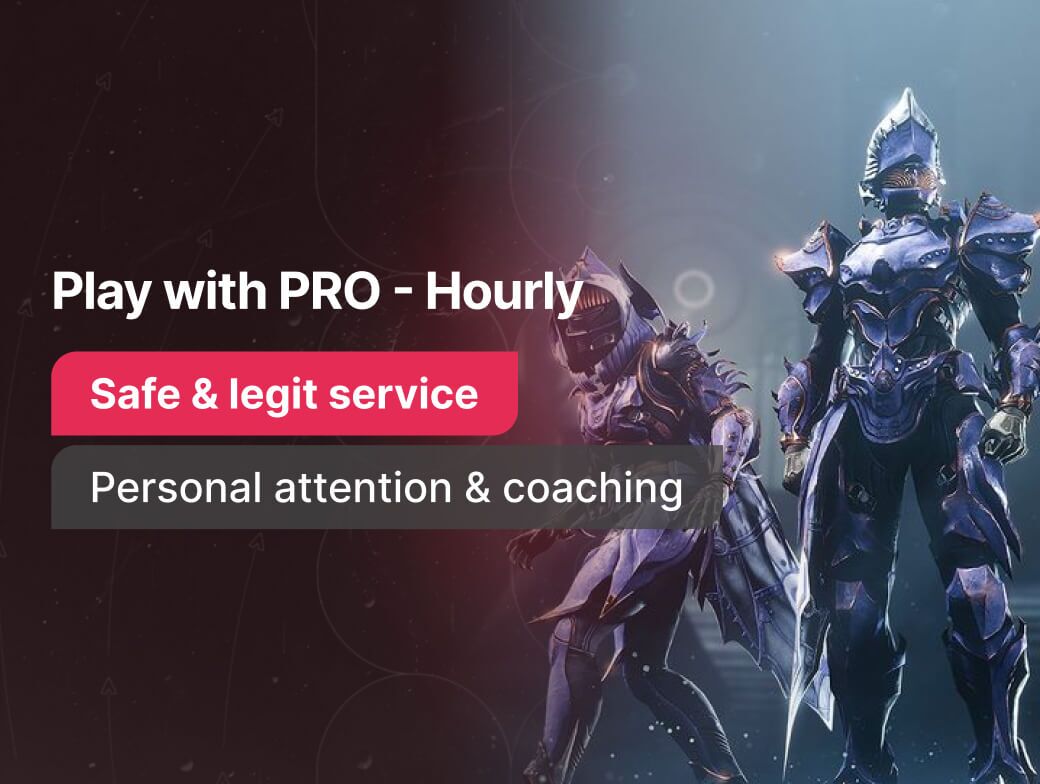
Play with Pro - Hourly Destiny 2 Coaching Service
You stay on the account. A PRO reviews your play by the hour.
Piloted vs selfplay: the distinction that actually matters
Strip away the slang and every service is 1 of 2 modes. The table shows who logs in, whose evening it takes, and what each mode fits.
| Factor | Piloted (recovery) | Selfplay (carry / sherpa) |
|---|---|---|
| Who logs in | The PRO, on your account | Only you |
| Your time | None. Away while it runs | Full session on your schedule |
| Credentials shared | Yes, for the session | Never |
| Account safety | Guaranteed. Dedicated PC, unique residential IP in your city | Guaranteed. Only you log in |
| Best for | Grinds you have no time for | Content you want to experience |
| Typical price vs same clear | Often lower. PRO speedruns alone | Often higher. Team works around you |
Neither mode is cheat software when a legitimate provider runs it. No aimbots. No lobby tools. No outside clients. The product is human skill and time.
The single variable that drives pricing, scheduling, and which option you should pick is who holds the controller.
Nightfall Alert packages on our live mega default to piloted. Self-Play (Sherpa) is the other mode on the same item, at 1.8× the piloted minutes.
Coaching is selfplay by construction. You stay on the account. A PRO reviews the play.
Account safety: how a piloted session runs
We guarantee the safety of your account in both modes. A selfplay carry never leaves your hands: only you log in, and the PROs join your fireteam. A piloted recovery runs on a setup built for 1 purpose, so that nothing about your account looks different from you playing.
What a piloted session on our page runs on:
- Our own gaming hubs. Every piloted order is played in our own gaming hubs, under physical supervision.
- A dedicated PC. That PC plays only your account for the whole order.
- A unique residential IP in your city. A real home connection. It is never a server VPN and never a shared address. To the game, the PRO looks like a family member playing from home in your city.
- Human, vetted players only. No software, no bots, no automation. In-house PROs play the activity the way the game is built to be played.
- Your security stays on. 2-factor authentication stays enabled, and we ask for the code in the private chat when a session needs it. A game service needs your game login at most. It never needs payment or email credentials.
Pick the mode by your calendar. Selfplay fits content you want to play yourself, Trials and ranked playlists included. Piloted fits the grind you have no evening for.
Scoped access stays simple: share only what the session needs, and change your password when the order completes if you wish.
Our recovery page opens a private chat before every handoff, and the loot stays on your account when the job ends.
See how recoveries work →In-house vetted PROs, a dedicated PC, a unique residential IP in your city, progress updates, and a clean handoff back to you. A recovery should look like that.
What each term looks like as a real order
Concrete examples mapped to live rows on this site today.
- Recovery: a Grandmaster Vanguard Alert pack while you are at work. The live nightfall package GM Vanguard Alert (3 Runs) is $20 and defaults to piloted.
- Carry: you plus PROs on a raid exotic farm. The live Vault of Glass package Guaranteed Vex Mythoclast is $45. Selfplay is on that page.
- Sherpa: a 1st full raid with a team that explains every encounter before the pull. Our 1st raid guide covers what to expect.
- Coaching: hourly 1:1 where a PRO reviews your play and fixes habits. Nobody clears for you. Live Play with Pro hourly is $25.
Vesper's Host Unleashed Title on the live dungeon mega is $59. That is a full-completion shape, every triumph in the dungeon.
Free versions of carry and sherpa exist: community sherpa Discords and in-game Fireteam Finder. Our LFG page breaks down where to look. The paid version buys schedule certainty, vetted skill, and no 3-hour lobby simulator.
A recovery on our page starts with configure and checkout. The price is fixed before you pay. A private chat then agrees the schedule and the secure handoff, or a selfplay invite. The PRO plays from a dedicated PC on a unique residential IP in your city. Loot sits on your account when the job ends. Change the password after if you wish.
Price logic: why the same clear costs different amounts
Across the market, the same activity prices differently by mode. The logic is consistent.
- Selfplay usually costs more than piloted for the same content, because the team works around your schedule and skill rather than speedrunning alone. You are buying seats plus patience.
- Teaching adds time, and time is the price driver. A sherpa-style run that explains every mechanic takes about 2× a silent clear.
- Difficulty multiplies everything. Master raids, contest-style challenge content, and Flawless runs cost more than standard clears.
- Bundles beat singles. Weekly sweeps and multi-raid packages price below the sum of their parts.
Live numbers on our rows today. GM Alert 3-run pack $20. Play with Pro hourly $25. Casual Play with PRO $20. Full raid fireteam of 5 PROs $50. Guardian for Hire $20. Vex Mythoclast farm $45. Vesper Unleashed Title $59. Sunshot catalyst $40.
If a piloted quote is dramatically cheaper than everyone else's, ask what corner is being cut. In this market the corner is usually the human player.
Nightfall self-play on the same 3-run item uses a 1.8× minute multiplier. That is why a sherpa GM pack costs more than the $20 piloted default.
Browse selfplay services →Selfplay carries put PROs in your fireteam, on comms, on your schedule. No credentials shared. Every drop lands live on your screen.
Which one should you actually buy?
Map the decision to what you are missing: time, skill, people, or knowledge.
| Your situation | Right product | Why |
|---|---|---|
| No time. Want weekly rewards banked | Recovery | Zero calendar cost. Accept the policy trade-off |
| Want to play the content, missing a competent team | Selfplay carry | You stay on account. Drops live on your screen |
| Want to learn the raid properly, once | Sherpa-style carry | Clear plus mechanics so you can repeat in LFG |
| Keep dying in content your gear should handle | Coaching | Fixes habits. No clear is bought |
| Have time and patience, short on people | LFG / community sherpas | Zero $. Schedule uncertainty is the cost |
2 honest anti-recommendations. If your goal is getting better at Destiny, a recovery does nothing for your hands. Buy coaching or a sherpa run.
If you mainly play competitive PvP on a tight budget, be careful with piloted Trials anywhere. Competitive playlists are where account-sharing enforcement is most plausible. Selfplay carries exist to keep you on the login.
The shop-side pick, what we will and will not print as a dollar, is how we pick a Destiny 2 carry.
Red flags when choosing a provider, ours included
Hold any shop, LFCarry included, to this checklist.
- They should name the mode. A listing that will not say piloted vs selfplay is hiding the answer you most need.
- Safety claims should be specific. Ask what the session runs on. Ours runs in our own gaming hubs, on a dedicated PC with a unique residential IP in your city, with vetted in-house players and no cheat software. We guarantee the safety of your account, and every part of that method is checkable.
- Anonymous marketplaces are a lottery. Platforms that resell to whoever bids lowest cannot vet who logs into your account. Ask: employees or randoms?
- Support should exist before you pay. Ask a scoping question in chat and time the answer. A shop that ghosts prospects will ghost problems.
- Reviews should be outside the shop. On-site testimonials are decoration. Read recent negative Trustpilot reviews. How a shop handles a botched order tells you everything.
That is the whole vocabulary lesson. Whatever you pick, pick it with the terms straight. Know who logs in. Know what the session runs on. Pay for the thing that actually solves your bottleneck.
Start a recovery from the recovery page or browse the Destiny 2 hub. The cards under section 1 are live packages, $20 piloted GM, $45 Vex farm, $25 hourly coaching.
A recovery on our page is the piloted path: configure the activity, pay the live calculator price, then hand the login to a vetted PRO in a private chat. The session runs from a dedicated PC on a unique residential IP in your city. Progress updates arrive while you are away. Loot, triumphs, and power sit on your Guardian when the job ends.
A carry on our page is the selfplay path. You stay signed in. You accept a fireteam invite. You hold the weapon and catch the drop on your screen. The PRO team covers mechanics you do not want to learn tonight, or teaches them if you booked a sherpa-style run.
Coaching is the 3rd shape and it stays selfplay. Play with Pro hourly is $25 on the live basic row. Casual Play with PRO is $20. A full raid fireteam of 5 PROs is $50. Guardian for Hire is $20 an hour. None of those rows ask for your password.
The GM Alert 3-run pack at $20 is the cheapest piloted recovery we sell on that mega. 3 clears. A grade on every run. Featured Tier 5 weapon chance plus shards and Conqueror progress. Self-Play (Sherpa) on the same item uses a 1.8× minute multiplier, so the clock and the bill grow if you want to stay in the fireteam.
Vault of Glass Guaranteed Vex Mythoclast is $45. That farm can run as a carry you sit in, or as a recovery you sleep through. Say the mode in chat before the team starts. The calculator on the mega is the price you pay.
Vesper's Host Unleashed Title is $59. That is every triumph in the dungeon, the top of that ladder. Pick piloted if you have no calendar. Pick selfplay if you want the clear on your own login.
From the source
Report“A recovery means a vetted professional signs into your account. A carry is selfplay: you play your own character. Steps: configure, private chat, piloted session, password change after.”
Report“Package gm_single GM Vanguard Alert (3 Runs) $20. Default mode piloted. Self-Play (Sherpa) mult 1.8.”
Report“type=basic, $25. Selfplay coaching.”
Report“Package vex-mythoclast Guaranteed Vex Mythoclast $45.”
Report“Package title Unleashed Title $59.”
Report“Play with Pro hourly $25. Casual $20. Full raid fireteam $50. Guardian for Hire $20.”
FAQ
A recovery, or recov, is a service where a professional player signs into your account and completes content for you: raids, Trials cards, Grandmaster-tier Ops, exotic quests. The term dates back to Halo rank recovery. It is always piloted, meaning the pro plays as your Guardian while you are away.
In a carry you play your own account inside a fireteam of skilled players who handle the hard parts. Nobody else logs in. In a recovery a pro plays your account for you. Carry means selfplay with no account sharing. Recovery means piloted. The account-safety math is completely different between them.
Yes. Ask for a carry, a sherpa run, or any listing marked selfplay or self-play. On those there is no account sharing at all. You stay signed in, you play your own Guardian, and the team carries the encounter around you. Nobody asks for your password, your 2-factor code, or a login QR. Only recovery, also called piloted, requires someone else to sign in.
Yes. We guarantee the safety of your account. A vetted in-house PRO plays from our own gaming hubs on a dedicated PC, through a unique residential IP in your city, so the session looks exactly like you playing from home. Human play only: no software, no bots.
Pick the mode that fits your calendar. Selfplay means you play your own account with a hired fireteam, and nobody else logs in. Piloted on our page means a vetted in-house PRO on a dedicated PC with a unique residential IP in your city. Share only game credentials, keep 2-factor authentication on, and change your password after the order if you wish.
A sherpa is an experienced player who guides newcomers through a raid or dungeon and teaches the mechanics along the way, a tradition that started as volunteer community work. Paid sherpa-style runs are selfplay carries with teaching built in: same clear, but the goal is that you leave knowing how to do it again.
Legitimate ones do not. The product is human skill, and reputable shops guarantee human-only play because cheat software is what gets accounts in trouble. That guarantee is only as good as the roster, which is why vetted in-house teams are safer than anonymous marketplaces that resell your order to unknown players.
Book a coaching session →Hourly coaching with endgame PROs: build review, live gameplay analysis, and habits that outlast any single boost.
- Live prices written in: GM Alert 3-run $20 piloted, Play with Pro hourly $25, Vex Mythoclast $45, Vesper Unleashed Title $59. Recovery and selfplay defined from our live recovery page.
- Terminology page opened. Piloted vs selfplay split.