


Why 2026 is the year to start raiding
Destiny 2 entered a new era on 9 June 2026. The Monument of Triumph update (9.7.0) was Bungie's final planned live-service content update, and it left the game in its most beginner-friendly state. Old rotator lockouts are gone. Every raid now lives in a permanent Raids and Dungeons node on the Director, launchable any week you like.
That changes what starting out feels like. You no longer wait for a featured week to learn 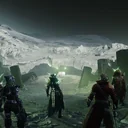 Crota's End. You pick a raid, open Fireteam Finder, and go. The Power cap stays at 550. Bring the guns you have. Raiding alongside a veteran mostly erases the gear gap.
This page exists to get you through your 1st clear. After that, the rest of the catalog opens on its own. Keep this tab open while you pick a listing. The 3 free raids, the Lightfall pick, and the Fireteam Finder steps are the whole decision.
The Director node is the whole point of 9.7.0 for a new raider. You are no longer guessing which raid is in rotation this Tuesday. You pick Vault of Glass on a Wednesday afternoon if that is the raid your friends can teach. You pick Crota's End on a Sunday if you have 2 hours and no DLC. The game stopped hiding the door.
Which raid should you run 1st?
The September 2026 answer is access-aware. The pick depends on the DLC you own.
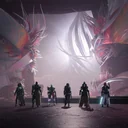 Root of Nightmares if you own Lightfall. Short modern raid, visual mechanics, Conditional Finality as the exotic. Teaching run: 2 to 3 hours. This is the DLC pick we send most 1st-timers to.
- Crota's End if you are free-to-play. Bungie's Monument of Triumph FAQ lists it for every player. Short and direct. A single core mechanic (the chalice) to learn. Teaching run: about 2 hours. The shortest free clear.
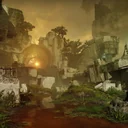 Vault of Glass if you are free-to-play and want the classic. Free for every player. Oracles and the Templar still teach callouts. Teaching run: 2 to 3 hours.
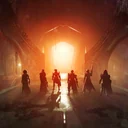 King's Fall if you are free-to-play and want a longer free raid. Free for every player. Heavier than Crota's End or Vault of Glass. A strong 2nd free clear. Teaching run: 2.5 to 3.5 hours.
 Deep Stone Crypt if you own Beyond Light. The teaching staple after Root of Nightmares. 2 to 3 hours.
 Salvation's Edge is the current pinnacle raid. It is a later clear, after you have a 1st under your belt. We also sell a guaranteed Euphony package. Do that after you have finished a teaching raid. The 1st clear is the habit. The pinnacle raid is the encore.
Book a raid carry →Book a sherpa-style teaching run with a PRO fireteam. They explain every encounter while you clear it, on your schedule, in any raid you pick.
Your 1st raid, run with a PRO fireteam
The 3 raids this page names, each with a live package: Salvation's Edge, Crota's End and King's Fall.



What actually happens inside a raid
A raid is 3 to 5 major encounters connected by traversal sections and hidden-chest detours. Every encounter is built from the same 3 ingredients:
- A mechanic. Plates to stand on, symbols to read and call out, buffs to carry and pass. This is the puzzle, and it is why raids cannot be matchmade.
- Roles. Usually 2 or 3 players run the mechanic while the rest clear enemies and keep everyone alive. Most 1st-timers start on add clear. Add clear is a real job. It is the seat that keeps the mechanic players alive.
- A damage phase. Once the puzzle is solved, the team dumps damage into the boss, then repeats until it dies.
Wipes are the lesson. Even veteran groups wipe. A 1st Root of Nightmares or Crota's End clear that takes 3 hours and 20 wipes is a normal Tuesday. The team that laughs after a wipe is the team you want to stay with.
Callouts are short words. Plate. Left. Swap. Dunk. You will hear the same 8 or 10 words for an hour. That is the language. Repeat them back once so the teacher knows you heard them. Then do the job you were given until the wipe or the cheer.
Your pre-raid prep checklist
You need less than you think. Run through this list the afternoon before:
- Access. Most raids require owning their expansion (Root of Nightmares → Lightfall, Deep Stone Crypt → Beyond Light). Bungie's Monument of Triumph FAQ lists Vault of Glass, King's Fall, and Crota's End as available to all players. Destiny 2: The Collection bundles every expansion and Dungeon Key if you want the full raid catalog.
- Power. The cap stays at 550. Do not grind for weeks. Bring what you have.
- A simple build. A survivable subclass (
 Solar,
  Arc, or
  Void) is fine. Add a damage super, a solid heavy weapon, and ammo mods. Ask your team what the boss wants.
 - Comms. A working microphone is near-mandatory for a 1st raid. Test it beforehand, and install Discord in case the group prefers it.
- Time. Block 3 uninterrupted hours. Nothing kills a learning run like a member leaving at the halfway mark.
- Optional homework. A 5-minute encounter video helps, and going in blind is legitimate too. Tell the team which option you picked.
Finding a team: Fireteam Finder, Discord, and sherpas
Destiny 2 has a built-in LFG tool, Fireteam Finder, on the roster screen. Bungie's Monument of Triumph FAQ names it as the in-game LFG. It is free, it works, and it is where most 1st raids start in 2026. Create or join a listing for your chosen raid, set the intent to relaxed or teaching, and write that you are a 1st-timer in the title. Plenty of lobbies welcome that.
2 labels matter when you browse. Sherpa means a teacher is in the lobby and expects new players. KWTD means know what to do. Skip those until you have a clear. Joining a KWTD listing as a 1st-timer wastes everyone's evening. That is the point of a listing tag.
If an evening of browsing produces nothing, a paid teaching run is the other door. It is the same 1st clear, on a clock you pick.
Groups fill fastest at peak hours. See how many people play Destiny 2 and when they are online.
Find a fireteam →Skip the lobby lottery. Our LFG page maps every route to a fireteam, from free in-game tools to a PRO team ready in minutes.
Etiquette and sherpa culture: the unwritten rules
Raid etiquette boils down to a single rule: protect the group's time and morale. In practice:
- Say you are new before the run starts. Expectations set early prevent frustration later.
- Own your mistakes instantly. Saying the wipe was you because you dropped the buff is the most respected sentence in Destiny. Hiding an error costs the team 3 more wipes of confused debugging.
- Stay on the mechanic you were given. Do not wander off to open a chest mid-encounter.
- Take the simple role 1st and volunteer for harder jobs on later runs.
- Respect breaks. 6 humans need water and 5 quiet minutes between encounters. Ask for a rerun if you need one of those breaks. A tired fireteam wipes more. Rested players wipe less.
Sherpa culture in the Monument of Triumph era is a long victory lap. Veterans who already have the titles are the people teaching 1st clears for the fun of it. Treat that hour as a gift. Stay for their 2nd character if they ask.
When a carry is the right call
Free sherpa runs are wonderful, and they depend on schedules aligning: yours, plus 5 volunteers, plus a teacher with patience that night. Sometimes that alignment never comes. A paid carry solves a different problem than a sherpa run does:
- You are time-poor. A PRO fireteam runs your 1st raid at the exact hour you book. No LFG lottery.
- You want a specific drop. Chasing Conditional Finality, Necrochasm, or Touch of Malice on a teaching schedule can take weeks. A guaranteed package finishes the hunt in a single sitting.
- You want the clear, then the hobby. The goal is identical: get past the 1st-raid hump, because after that you can sherpa the next person.
Live catalog, 20 September 2026. Salvation's Edge guaranteed Euphony package is $65. Crota's End with Necrochasm is $60. King's Fall with Touch of Malice is $25. Those 3 cards sit on this page after the pick list. Open the one that matches the raid you just chose.
If you finish a teaching clear and still want another pass the same week, run the same raid on a 2nd character. The encounters stay familiar. The loot table rolls again. That is how a 1st clear becomes a habit.
From the source
Official“Update 9.7.0 / Monument of Triumph launched 9 June 2026. Raids and Dungeons Director node.”
Official“Free raids: Vault of Glass, King's Fall, Crota's End. Fireteam Finder is the in-game LFG. Power cap 550.”
“Salvation's Edge page value.usd = $65 (guaranteed Euphony package on the mega).”
“Crota's End page value.usd = $60.”
“King's Fall page value.usd = $25.”
FAQ
No. Bungie's Monument of Triumph FAQ lists Vault of Glass, King's Fall, and Crota's End as available to all players. Those are your free 1st-raid options. Most other raids need their expansion. Root of Nightmares needs Lightfall. Deep Stone Crypt needs Beyond Light. Destiny 2: The Collection bundles every expansion and Dungeon Key.
The Power cap stays at 550. Bring the guns you have. A veteran fireteam covers the rest of the gap.
Block 3 hours. A short teaching clear of Crota's End or Root of Nightmares often finishes in 2 to 3. King's Fall runs longer. Wipes are normal.
No matchmade raids. Use Fireteam Finder on the roster screen, or book a teaching run. The puzzle is why the game will not throw 6 strangers into an encounter together.
Crota's End is the shortest free clear, with a single core mechanic. Vault of Glass is the classic. King's Fall is heavier. Save it as a 2nd free clear.
Say so. Own the wipe in a single sentence, reset, go again. A teaching lobby expects this. A KWTD lobby does not. Join the 1st kind.
Yes, when a volunteer teacher posts the listing. They run on that teacher's clock. A paid carry is the same 1st clear when that clock never lines up with yours.
Browse D2 services →Raids, dungeons, exotics, titles. Browse every LFCarry D2 service and turn your bucket list into a booking.
- Copy pass. Free-raid list and Fireteam Finder taken from the MOT FAQ. Power printed as cap 550. Offer cards moved to Salvation's Edge $65, Crota's End $60, King's Fall $25.
- Published as a sherpa-style 1st-raid guide.